

ICD-O-3 is the working vocabulary for oncology research, used for tumor morphology, behavior, and topography coding. It is smaller than SNOMED CT and bigger than CDISC CT, with its own quirks around behavior codes and grade modifiers. Most generic FHIR terminology servers handle it on a curve. Five handle it cleanly.
For framing, the complete guide to FHIR terminology servers for clinical research in 2026 is the right primer.
1. Ontoserver
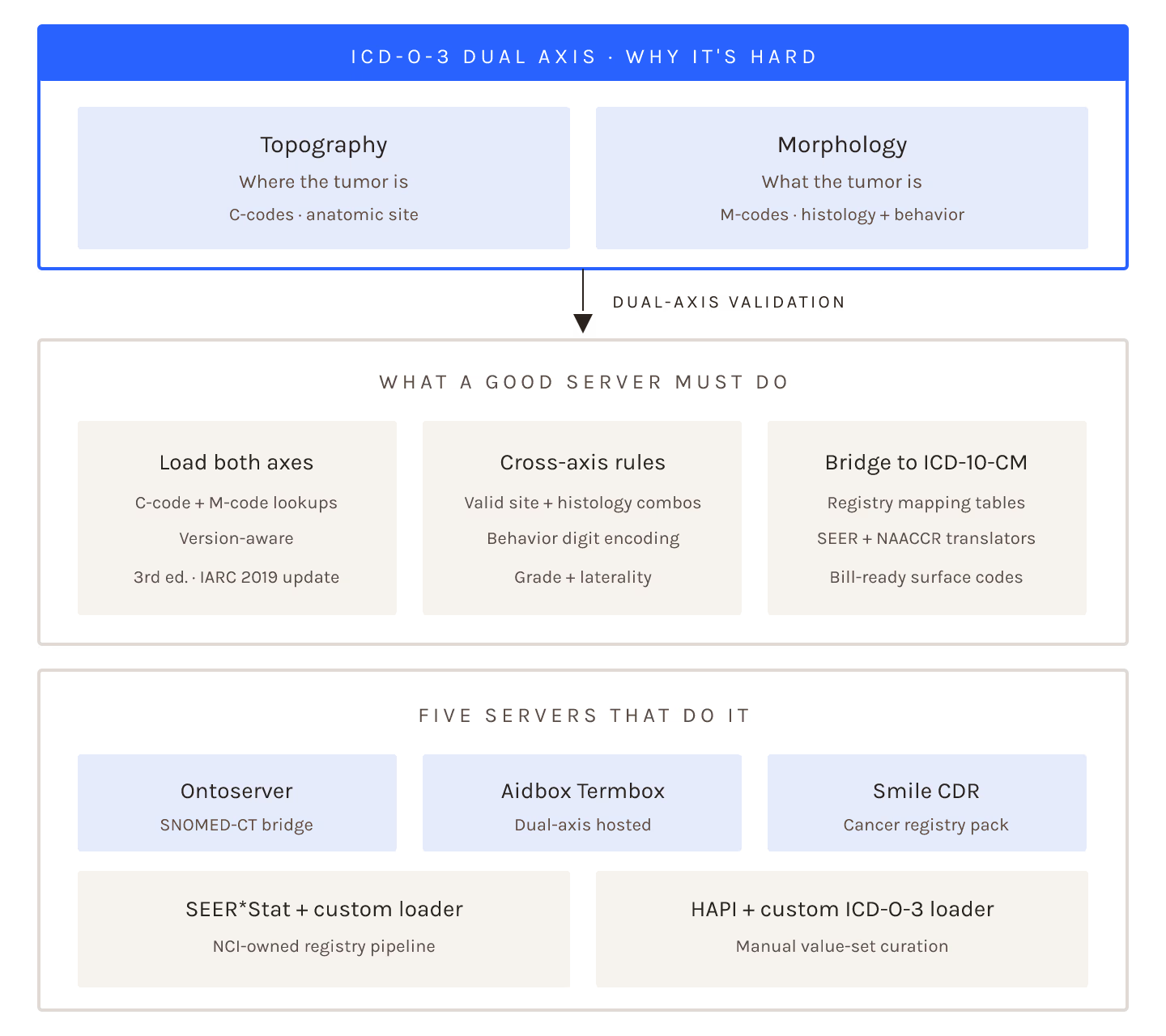
Ontoserver ships an ICD-O-3 loader that handles the morphology, behavior, and topography codes as separate code systems with documented cross-references. $expand against the hierarchy is fast, and $translate to SNOMED CT covers the common bridges to general medical vocabularies.
For oncology-heavy research stacks, Ontoserver is the conservative default.
2. Snowstorm with ICD-O-3 Extension
Snowstorm handles ICD-O-3 through a community-maintained extension that follows the WHO release schedule with a short lag. The performance matches the rest of Snowstorm's terminology layer.
For sponsors with engineering teams that own SNOMED CT infrastructure already, Snowstorm with the ICD-O-3 extension is a fair pick.
3. Smile Digital Health Terminology Module
Smile's terminology module loads ICD-O-3 alongside SNOMED CT and MedDRA, with consistent $expand behavior across all three. For oncology research running on Smile, the integration is the strongest argument.
4. SEER API Wrapper
The NCI SEER API exposes ICD-O-3 alongside its own analytic codes, and a thin FHIR wrapper turns it into a serviceable terminology service for oncology-specific use cases. The maintenance lives with NCI rather than the sponsor.
The trade-off is service uptime: the SEER API is a public service rather than a sponsor-owned deployment, which limits its fit for inspection-critical paths.
5. HAPI FHIR with ICD-O-3 Loader
HAPI's terminology layer handles ICD-O-3 through community loaders, with the same $expand and $translate behavior the rest of HAPI provides. For sponsors already on HAPI for other reasons, this is a small additional lift.
For sponsors not on HAPI, adopting it just for ICD-O-3 rarely makes sense.
What Makes ICD-O-3 Handling Clean
Three things separate clean ICD-O-3 handling from a sloppy job. The first is treating morphology, behavior, and topography as related but distinct code systems, not a single flattened list. The second is handling the WHO release cycle without manual loading. The third is providing $translate operations to SNOMED CT so oncology data can flow into a broader research store.
Ontoserver, Snowstorm with the extension, and Smile cover all three honestly. SEER API Wrapper covers the lookups well but at the cost of running on someone else's service. HAPI covers them with sponsor-owned tooling.
How to Decide
For industry-sponsored oncology trials, Ontoserver remains the safest default. For academic-led oncology research with engineering teams, Snowstorm with the ICD-O-3 extension is the right pick. For sponsors already on Smile or HAPI for the rest of the stack, the matching terminology module closes the gap without forcing a vendor change.
For the broader adverse-event coding angle that often touches oncology workflows, top 3 terminology servers for adverse event coding workflows is the natural next read. For the mapping side, best terminology tools for SNOMED CT to MedDRA mapping covers the mapping work. And clinical FHIR resources and guides on the homepage points to the rest of the explainers.
Sources
- Comparative Analysis of Clinical Terminology Servers (peer-reviewed cross-vendor analysis) - Springer Nature 2024
- Terminology Service spec (canonical operations reference) - HL7 FHIR R6
- Terminology Services overview (evergreen) - SNOMED Implementation site