

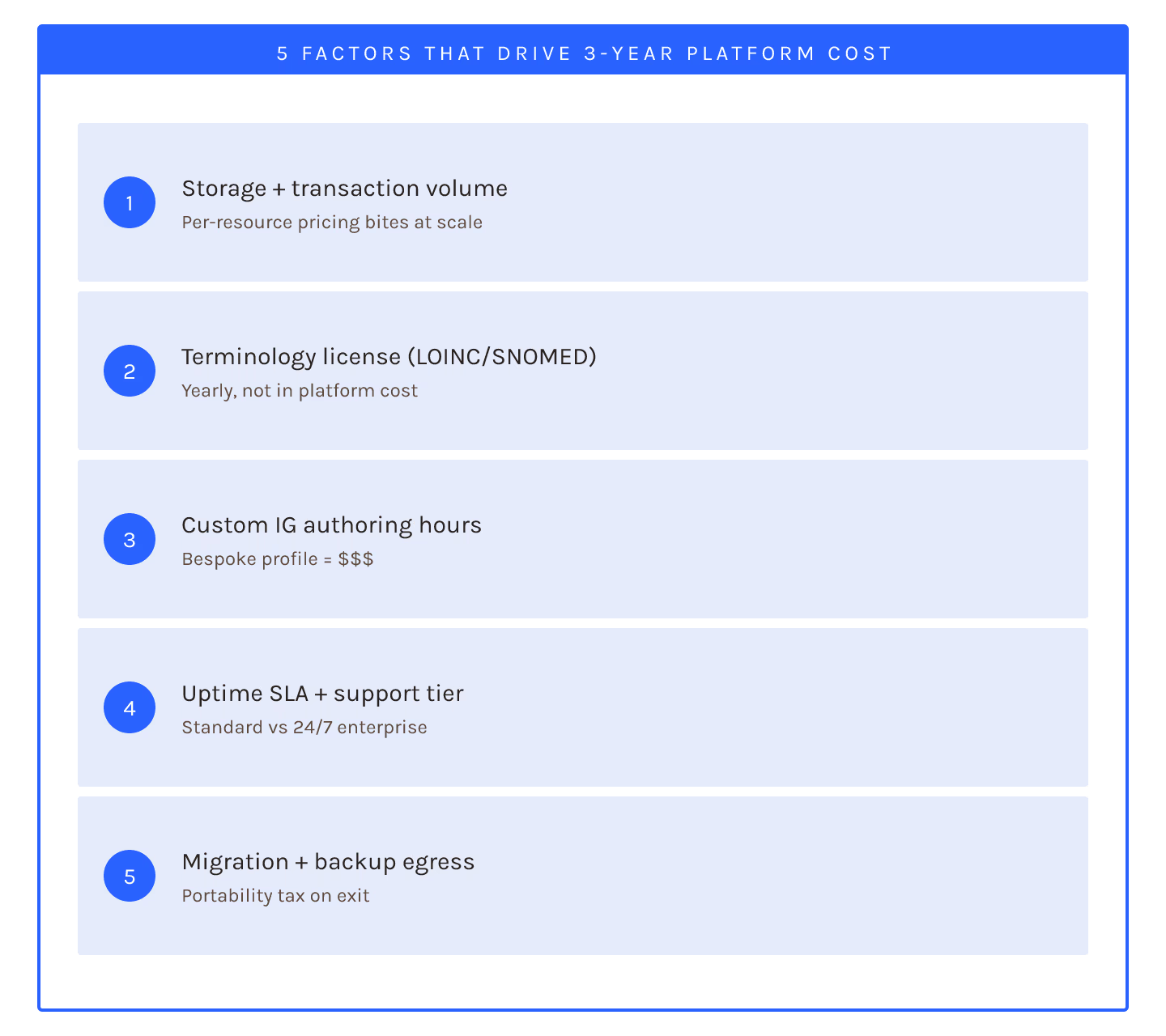
Picking a FHIR platform is a decision whose full cost only shows after 3 years. Five factors determine whether the initial platform holds up or requires re-platforming.
Factor 1: Vendor ecosystem lock-in. Custom features that don't align with FHIR spec accumulate migration cost. Choose vendors that stay close to the spec, not ones that layer proprietary extensions.
Factor 2: Terminology infrastructure cost. Terminology servers, license fees (SNOMED, UMLS), and admin tooling accumulate over years. Underestimate at your peril.
Factor 3: Auth infrastructure. SMART on FHIR auth is standard; custom auth on top adds maintenance cost. Prefer platforms that ship SMART auth natively.
Factor 4: Bulk data operational cost. `$export` infrastructure (output storage, manifest hosting, expiry cleanup) has real ongoing costs. Cloud storage bills for bulk-heavy analytics workloads run into thousands/month.
Factor 5: Team ramp-up time. Platform learning curves for new hires compound. Prefer platforms with strong docs, active community, and open source alternatives.
3-year TCO example (moderate health system)
| Component | Year 1 | Year 3 total |
|---|---|---|
| FHIR server license (commercial) | $200k | $700k |
| FHIR server (open source) | Dev cost | Dev cost |
| Terminology (Ontoserver license) | $80k | $250k |
| Terminology (open source) | Dev + UMLS | Dev + UMLS |
| SMART auth | $50k (Auth0) | $180k |
| Bulk export storage | $10k | $50k |
| Total (commercial) | $340k+ | $1.2M+ |
| Total (open source) | Dev only | Dev + infra |
Decision framework
1. Volume + scale > vendor support → commercial 2. Team engineering strength + budget constraint → open source 3. Regulatory-heavy environment → commercial (support matters) 4. Startup, greenfield, cloud-native → open source or newer FHIR-native (Medplum)
Platform decisions echo for years. Model 3-year TCO before signing, not just year 1.