

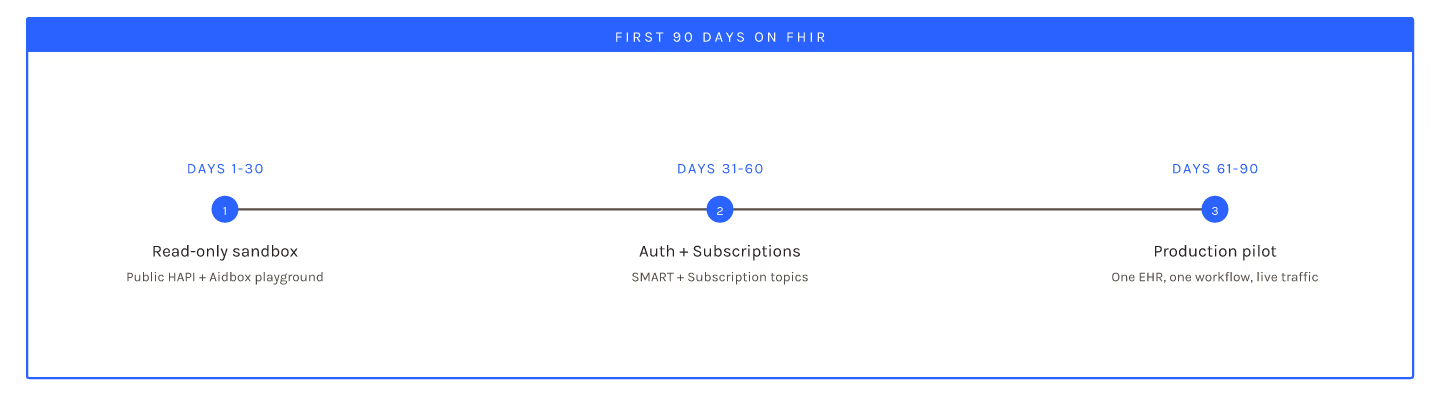
New team member joining FHIR-first health IT? First 90 days focus on the concepts that shape decisions. Nothing else compounds as fast as these fundamentals.
Days 1-30: Core resource model
1. Resource hierarchy. Patient, Encounter, Observation, Condition, MedicationRequest as core; secondary resources layered on. 2. References vs contained. When to reference by URL vs embed with contained[]. 3. Extensions. Standard vs custom; how to reference StructureDefinitions. 4. Meta.lastUpdated + versioning. How versioning works with ETag/If-Match.
Days 31-60: REST API mechanics
1. HTTP verbs and semantics. GET vs POST vs PUT; conditional creates; Bundle transactions. 2. Search parameters. Basic, chained, reverse-chained, _include, _revinclude. 3. **Bulk data `$export`. Async operation semantics, manifest structure, output storage. 4. Search parameter definitions.** How custom search parameters get defined.
Days 61-90: Profiles and IGs
1. US Core profile suite. What conformance means and how it's verified. 2. Terminology bindings. ValueSets, CodeSystems, ConceptMaps. 3. **Inferno conformance testing. How to run and interpret results. 4. Da Vinci and CMS-0057 context.** What regulatory context shapes the profile choices.
Learning resources
| Source | Best for |
|---|---|
| HL7 FHIR spec (R4) | Reference |
| SMART tutorials | Auth patterns |
| FHIR chat | Community Q&A |
| Vendor tutorials (Aidbox, Medplum, HAPI) | Product-specific |
Common misconceptions
1. "FHIR is just JSON." It's a specification with profiles, terminology, and conformance. 2. "US Core = all US healthcare." It's a baseline; Da Vinci profiles extend for specific use cases. 3. "FHIR replaces HL7v2." v2 is still the dominant integration surface; FHIR complements.
FHIR fluency compounds. The first 90 days of focused study pays off for years.