

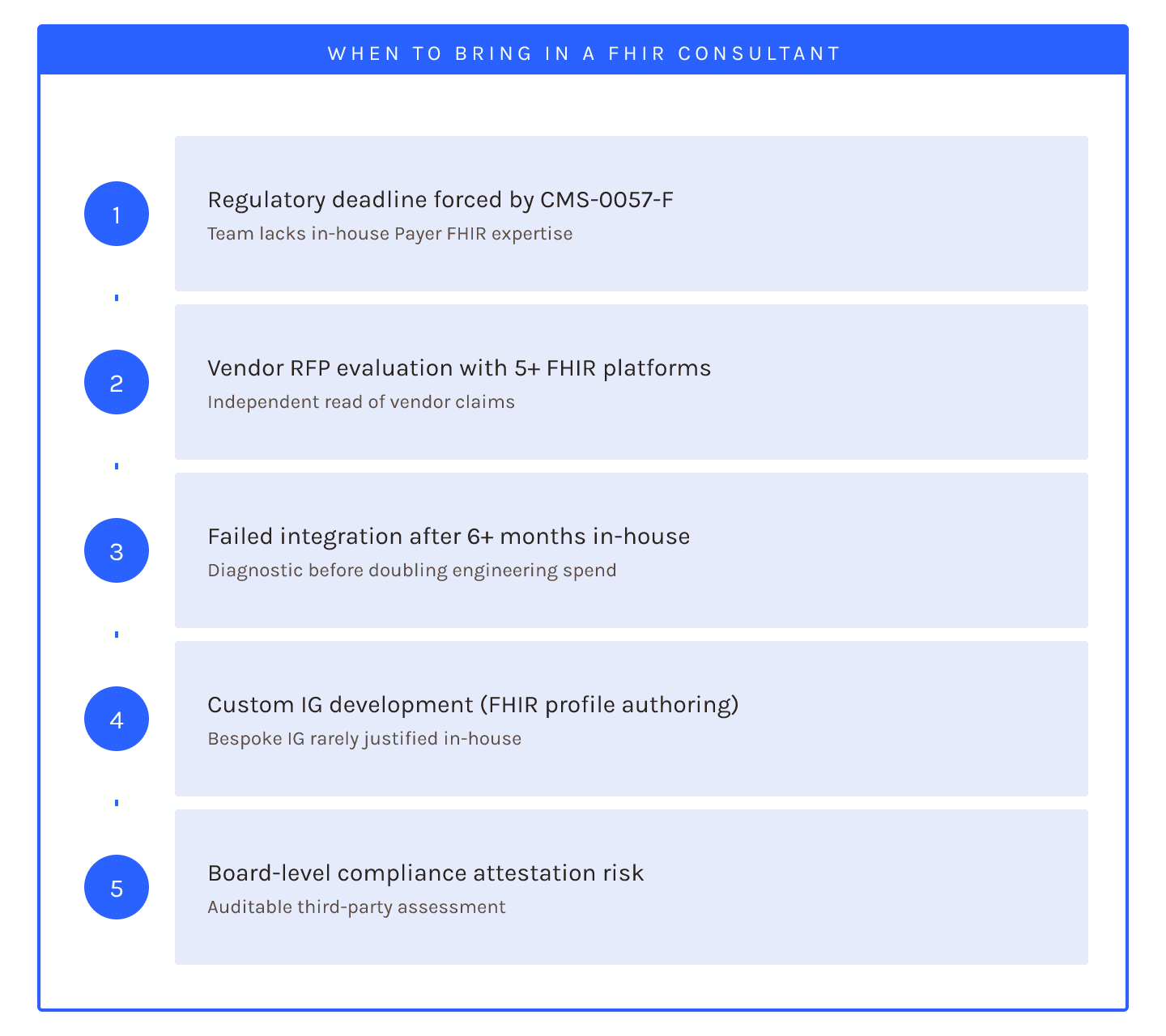
Bringing in FHIR consultants is either a force-multiplier or a budget drain. The difference is knowing what work actually requires outside expertise and what should stay in-house.
Where consultants help most
1. Initial architecture decisions. Which FHIR server, which auth model, which terminology stack — one-shot decisions with long-term consequences. Consultants who've seen many deployments accelerate these. 2. Inferno conformance testing setup. Inferno test harness setup + interpreting failures is niche knowledge. 3. HL7v2-to-FHIR migration paths. The HL7v2-to-FHIR IG has edge cases that experienced consultants know. 4. CMS-0057 attestation prep. Regulatory-specific expertise pays off.
Where consultants slow you down
1. Ongoing operational work. Team should own this, not outsource. 2. Application-specific business logic. Consultants don't know your domain. 3. Small greenfield deployments. Vendor docs + open source tooling covers well-understood patterns.
Selection criteria
| Signal | Weight |
|---|---|
| Named deployments (references) | High |
| Contribution to FHIR IGs (HL7 WG member) | Medium |
| Vendor-agnostic vs vendor-partnered | Depends on your stack |
| Availability for ongoing support | Medium |
Good FHIR consultants save 3-6 months on architecture; bad ones slow you down and leave debt. Interview like a senior engineering hire, not a vendor selection.